01
The run
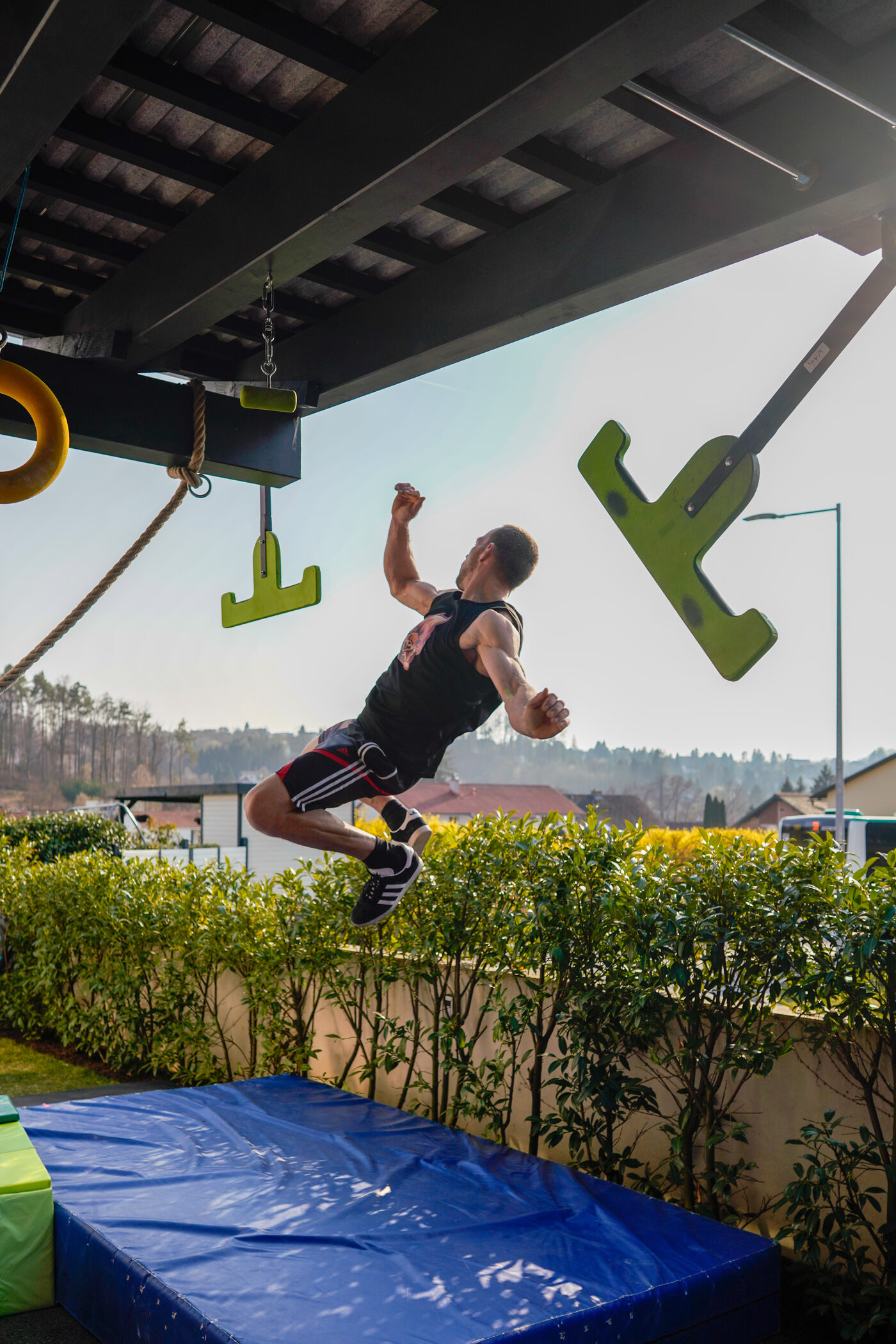
Athletes go one at a time, working through the course from the first obstacle to the last. At the end, they hit a buzzer by hand to stop the clock. Reach it without falling and within the time limit, and you've “finished”.
Ninja Sport is a young, fast-growing obstacle sport. Athletes take on a course of jumps, hanging obstacles, balance and climbing challenges, aiming to get as far as they can as quickly as they can. You're up against the course — not the other athletes.

Ninja Sport draws on climbing, gymnastics, parkour and obstacle racing. A run is a sequence of obstacles — hanging and traversing sections, stepping stones, jumps, climbing walls, balance sections — tackled one after another. Hit the buzzer at the end without falling off, dropping into the water or running out of time, and you've completed the course.
At heart, Ninja Sport is an individual battle against the course. It's not about beating anyone else — it's about going as far and as fast as you can. That makes it a great fit for children, teenagers, adults and masters alike: everyone runs the same course, but each of them is competing against themselves.
Ninja Sport is one of the few sports whose origins can be pinned down to a specific year — and a specific TV show.
In 1997, Japanese TV launches a competition show called SASUKE: 100 contestants, four progressively harder stages of obstacles and, waiting at the end, the notorious “Mount Midoriyama”. It's an instant hit — and is exported around the world as Ninja Warrior.
SASUKE arrives in Germany on RTL II in 2009 — initially just the Japanese episodes with German commentary. It isn't until 2016 that Germany gets its own version, Ninja Warrior Germany. The show becomes a ratings hit and puts the sport on the map across the German-speaking world.
In 2017, Puls 4 airs the first series of Ninja Warrior Austria. For the first time, Austrian athletes face the very obstacles they'd only ever seen on TV — in front of a home crowd. Across all its series, nobody ever wins the final — but with every episode, the Austrian ninja scene grows.
What began as a TV show has taken on a life of its own. Dedicated ninja gyms have opened all over the world, and international federations now run championships. Obstacles first built for the cameras — the Warped Wall, Cliffhanger, Salmon Ladder, Cheese Doors and Pipe Slider — are now standard kit. “TV acrobatics” has grown into a fully fledged competitive obstacle sport.
Athletes go one at a time, working through the course from the first obstacle to the last. At the end, they hit a buzzer by hand to stop the clock. Reach it without falling and within the time limit, and you've “finished”.
Touching the ground, the water or the mats beneath the obstacles ends your run. So does running out of time or touching anything the course setter has declared off-limits (e.g. the wrong obstacle or a marked boundary). The course setter decides the exact rules for each competition. If you go out, you're ranked on the last obstacle you reached and your time at that point.
Scoring comes down to two questions: How far? (which obstacle you reached) and How fast? (how long it took you to get there). The further and faster, the better. If two athletes reach the same point, the quicker time wins.
As well as the classic full course, there are shorter speed competitions, standalone skill challenges (one obstacle, several attempts) and head-to-head races on two parallel lanes. Newer, and increasingly popular, are formats with multiple attempts: each athlete gets three runs, and after a fall you restart from the last checkpoint you reached — so everyone spends as much time on the course as possible. The format used depends on the organiser and the federation.
Internationally, Ninja Sport is still finding its structure, with several federations having grown up side by side. Here's a quick overview of the main ones.
Union Internationale de Pentathlon Moderne
The Olympic governing body for modern pentathlon introduced Obstacle as a new pentathlon discipline from 2024 — making it the highest-ranking federation to include ninja obstacles in a recognised competition system.
Federation of International Sports Obstacle
The international organisation for obstacle sports, currently in transition to UIPM — its member federations are being brought into the UIPM structure.
European Obstacle Sports Federation
The European umbrella body, which organises European competitions and championships — including the Ninja European Championships.
World Ninja League
Firmly rooted in North America, with its own league, tier system, All-Stars and World Championships. The WNL has shaped the US market and set the benchmark for gym and obstacle design.
Where Ninjaverband Austria stands: our goal is to be able to send Austrian athletes officially to UIPM competitions (European and World Championships), through a FISO membership that is being transferred into the UIPM structure. Find out more under What we do.
Ninja Sport caters for a wide range of age groups. The exact split varies slightly from federation to federation, but the principle is the same everywhere: one course per age group, with separate rankings.
Sportswear you can move freely in. Shoes with good grip — ideally clean indoor trainers. A gym nearby. That's it. A background in climbing or gymnastics helps but isn't essential — most gyms run beginner sessions that teach you the key movements.
First step: find your nearest gym on the gym map (on movum.fyi, an external site) and book a taster session. Most gyms make it really easy to give it a try.
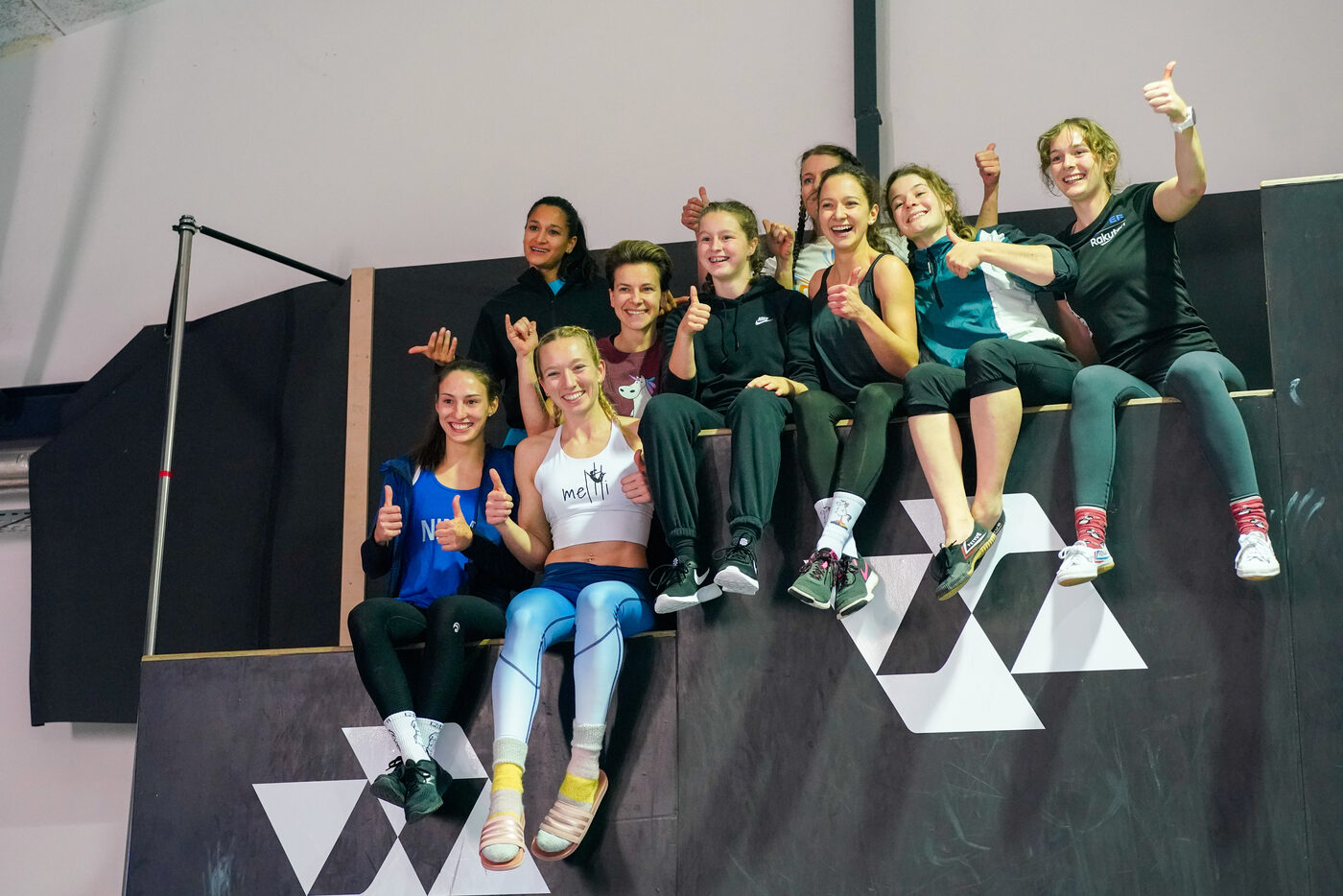
Find out where to start Ninja Sport in your city, which competitions are held nearby and which age groups you can compete in.
Athlete, gym owner, coach or club — we'd love to hear from anyone who wants to help shape this sport in Austria.